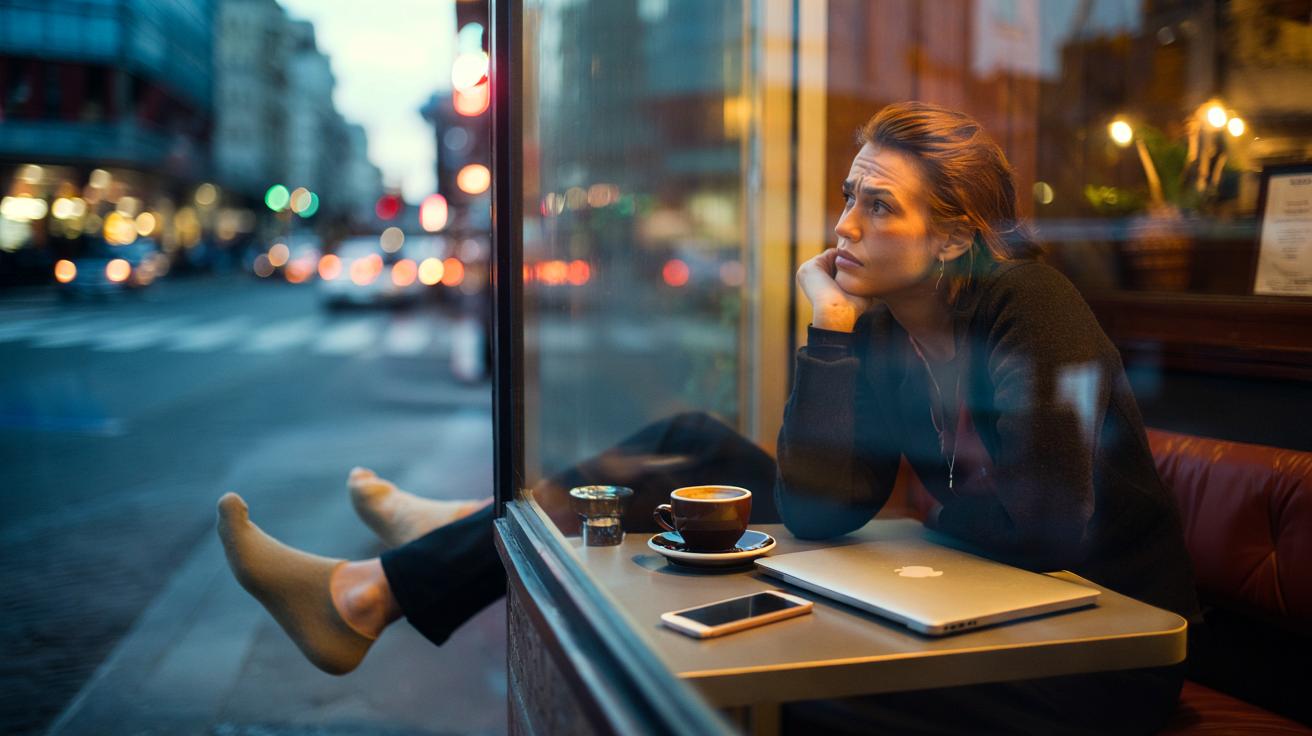
The first time I noticed it, I was in a café watching a man at the next table. His coffee was already finished, laptop closed, but his leg kept bouncing under the chair as if someone had pressed a hidden accelerator. He checked his phone, opened it, closed it, opened it again without reading anything. The room around him was soft: low music, warm light, gentle clinking of cups. Inside his body, though, it looked like a storm.
At one point he just stared at the window, breathing a bit faster than the scene called for.
That’s when it clicked: for some people, stillness doesn’t feel peaceful at all. It feels dangerous.
Why slowing down feels like taking your armor off
You see this everywhere once you start looking. The colleague who books back-to-back meetings and says they “hate dead time”. The friend who plays podcasts even while brushing their teeth. The parent who scrolls their phone at 1 a.m. in the dark, long after the kids are asleep, just to avoid that quiet gap before bed.
On the surface, it looks like ambition, curiosity, productivity. Underneath, there’s something else: a kind of background fear that if they stop moving, something inside will catch up with them.
A therapist I spoke to recently told me about a client, mid-thirties, big job in tech. On paper, a star. In reality, she was scheduling her life in ten-minute blocks. Gym at 6:00. Emails at 7:10. Commute with work calls. Nights “for friends” that were really just another way not to be alone.
One weekend she got sick and had to stay home. No work, no gym, no social life. Just her, her couch and her thoughts. She described it like being “locked in a room with an alarm going off inside my chest”. That quiet weekend didn’t feel like rest. It felt like exposure.
When you grow up in chaos, criticism or emotional neglect, stillness isn’t neutral. Your nervous system often learns that the only safe state is motion: doing, fixing, helping, proving. Silence becomes suspicious. Pauses feel like the moment before something bad happens.
So as an adult, you might unconsciously equate slowness with being undefended. If you’re not producing, people might see the “real you” and leave. If you’re not useful, you might be rejected. The body remembers, even when the mind insists everything is fine now. *This is what transforms a simple Sunday afternoon on the sofa into an almost physical sense of threat.*
Learning to touch stillness without freaking out
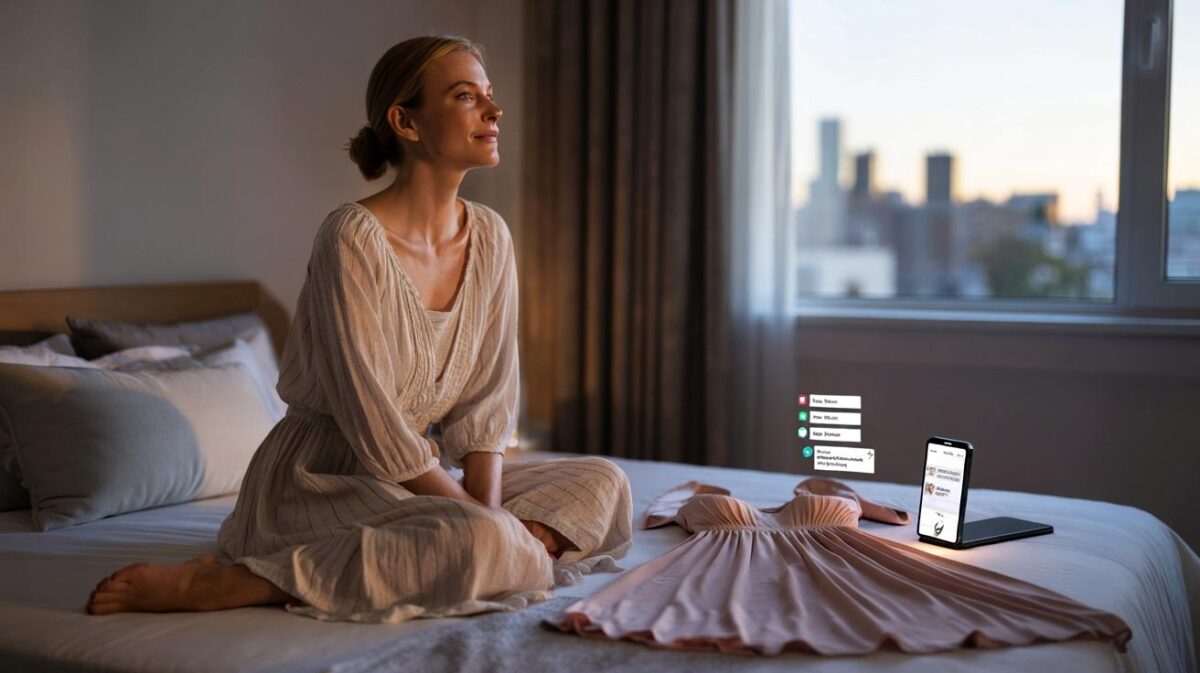
One practical way to start changing this isn’t a big spiritual retreat. It’s much smaller and far less glamorous: micro-pauses. Ten seconds before you open a new tab. Three breaths before you answer a message. A one-minute sit on the edge of your bed before you get up.
➡️ How to clean a blackened patio and garden paths with almost no effort
➡️ Greenland crisis: Denmark urges officials to switch off Bluetooth to avoid spying risk
➡️ Gen Z is losing a 5,500‑year‑old skill: 40% are losing mastery of handwritten communication
➡️ Scientists discover an object from another system racing toward us at record speed
➡️ Waze and Google Maps no longer show the shortest routes, angry users speak out
Instead of demanding full meditation sessions from yourself, you sneak in these tiny speed bumps through the day. You don’t label them “self-care”. You just let your body practice the idea that nothing bad happens in those gaps. Over time, those few seconds are like loosening a tight knot, fiber by fiber.
Most people who struggle with stillness go too hard, too fast. They read somewhere that “you need 20 minutes of mindfulness daily” and then feel like failures when their mind screams after 90 seconds. Let’s be honest: nobody really does this every single day.
The trap is turning slowness into another performance. Another item on your list you can do “right” or “wrong”. If you already link rest with vulnerability, judging your attempts only reinforces the idea that pausing is a dangerous test you keep failing. A kinder approach is to treat each tiny pause as an experiment, not a verdict on your character.
“People think they’re bad at resting,” says one psychologist I interviewed, “but what they’re actually bad at is feeling. Stillness is just where the feelings finally get a chance to speak.”
- Start small – Ten seconds of quiet is still quiet. Let that count.
- Anchor pauses to habits – After handwashing, before unlocking your phone, right before you stand up.
- Expect discomfort – The goal isn’t instant calm, it’s surviving the wobble.
- Stay curious, not critical – Notice what shows up without diagnosing yourself.
- Return to the body – Feet on the floor, weight of your back on the chair, air on your skin.
The quiet space you might be avoiding is also where you heal
There’s a strange moment that happens once you stop fighting every pause. The discomfort doesn’t vanish, but it changes flavor. Instead of feeling like danger, it starts to feel more like grief, or sadness, or plain old fatigue. Not fun emotions. Yet much more workable than a vague, buzzing dread.
People who’ve lived whole decades in fifth gear sometimes realize they were never actually “high-energy personalities”. They were just scared of coming down to where their true energy level lives. That discovery can be bittersweet. You mourn the heroic version of yourself you’ve been presenting, and you meet the quieter person you really are.
This isn’t about becoming a calm, glowing, always-centered human. That’s Instagram fantasy. It’s more about not having to run from your own inner room anymore. Being able to sit on the couch on a random Tuesday, phone in another room, and not feel like your skin is on inside out.
Some days you’ll still dodge the silence with scrolling, noise, work, or drama. Some seasons of life will demand speed, and that’s fine. The point is no longer that slowing down is a trap. It becomes one more option on the menu of how you can live. And once stillness stops meaning “I’m exposed and unsafe”, it can start meaning something else: “I’m here, with myself, and I’m not going anywhere.”
| Key point | Detail | Value for the reader |
|---|---|---|
| Stillness can feel threatening | Past experiences teach the body that quiet moments are when criticism, conflict or abandonment hit | Normalizes why slowing down feels uncomfortable instead of “relaxing” |
| Micro-pauses are a realistic entry point | Short, frequent breaks of 10–60 seconds gently retrain the nervous system | Makes rest accessible without needing long practices or drastic lifestyle shifts |
| Discomfort doesn’t mean you’re doing it wrong | Unease in stillness is part of healing, not proof that rest “isn’t for you” | Reduces self-criticism and encourages experimentation with new habits |
FAQ:
- Why do I feel anxious when I try to relax?Your brain may have linked quiet moments with past stress or criticism, so rest triggers an old alarm. The body isn’t confused, it’s repeating what once kept you safe. That pattern can change, but it needs slow, repeated proof that calm doesn’t equal danger anymore.
- Is being always busy a trauma response?Not always, but constant busyness is a common coping strategy. For some, staying productive keeps painful thoughts or memories at bay. The key question isn’t “Do I work a lot?” but “What happens inside me when I stop?” If the answer is panic, there’s usually more than ambition involved.
- How can I start slowing down without feeling lazy?Redefine rest as maintenance, like charging a battery, not a reward. Tie small pauses to your values: being more present with your kids, making clearer decisions, lowering irritability. When rest has a purpose beyond “doing nothing”, the word “lazy” loses some of its bite.
- What if sitting still makes me cry?That often means your system finally has space to release what’s been held in. You’re not “too emotional”; you’re de-thawing. If it feels overwhelming, shorten the pauses, ground yourself in physical sensations and consider talking to a therapist to process what surfaces.
- Can I ever become someone who enjoys stillness?Yes, though it might not look like the version you imagine. You may never love silent retreats, and that’s fine. You might discover your kind of stillness is a slow walk, washing dishes without noise, or sitting on the balcony watching the street. The goal isn’t perfection, it’s having at least a few moments where being with yourself feels less like a threat and more like coming home.