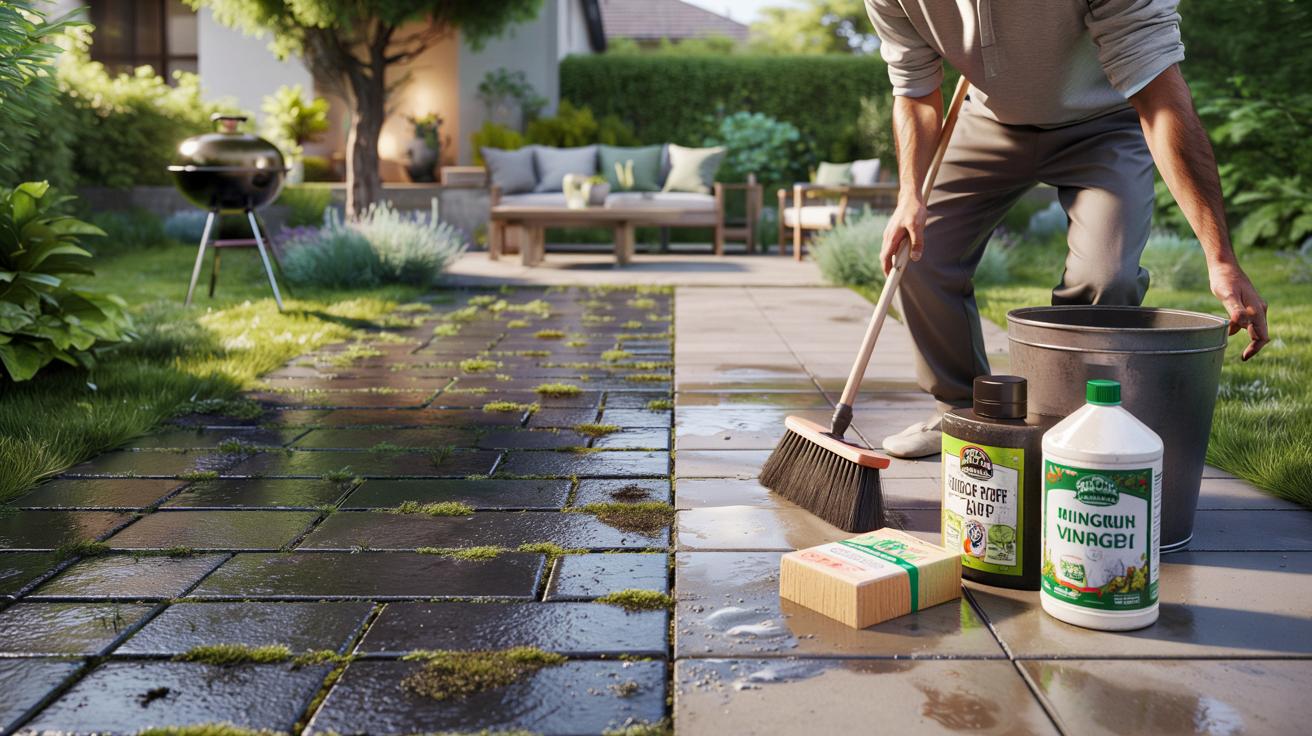
The slabs are dull, the joints are clogged with mud, and a slippery green film lurks on every shaded step. As the first warm evenings arrive and the barbecue makes its comeback, many homeowners realise their outdoor space needs a serious reset. The good news: you don’t need harsh chemicals or back-breaking work to bring a grey, blackened terrace back to life.
Why your terrace turns black after winter
Rain, frost and shade create the ideal conditions for algae, moss and dirt to settle on slabs, pavers and decking. Add dead leaves, pollution and the usual traffic from pets or kids, and the surface slowly darkens.
Porous materials like natural stone or concrete absorb grime more easily, while joints between tiles trap soil and seeds. Over time, this leads to weeds between paving stones and blackened lines between tiles.
Most “black” patios are not ruined; they’re just covered in a mixture of organic residue, pollution and microscopic algae.
Cleaning that build-up does not always require specialist detergents. A few household products, used properly, can remove much of the dirt without stripping the surface or damaging the joints.
Black soap and water: a gentle workhorse for wood and tiles
Black soap, a traditional plant-based cleaner sold as a thick paste or liquid, is widely used in France and increasingly common in the UK and US under eco-friendly brands. It is particularly effective on wooden decking and composite boards.
How to use black soap on your patio
- Fill a bucket with hot water.
- Add a small quantity of liquid black soap (follow the label, usually a few tablespoons).
- Apply with a stiff broom or deck brush, scrubbing along the grain on wood.
- Leave for several minutes on heavily soiled areas.
- Rinse thoroughly with clean water.
The product dissolves greasy deposits and lifts winter grime without attacking the fibres of the wood or the surface of tiles. A single container often lasts for several seasons, which keeps costs low.
For composite or wooden decks, black soap and hot water often outperform stronger, more aggressive cleaners that can strip colour and damage fibres.
Soapy water and baking soda for stubborn grime
When you do not have black soap, a mix of washing-up liquid and baking soda can handle most blackened areas, especially on concrete or stone slabs.
➡️ Astronomers think they finally know what James Webb’s mysterious “little red dots” really are
➡️ People who feel uncomfortable slowing down often associate stillness with vulnerability
➡️ Gen Z is losing a 5,500‑year‑old skill: 40% are losing mastery of handwritten communication
➡️ Greenland crisis: Denmark urges officials to switch off Bluetooth to avoid spying risk
➡️ Scientists discover an object from another system racing toward us at record speed
➡️ Waze and Google Maps no longer show the shortest routes, angry users speak out
A step-by-step method for concrete and stone
Baking soda acts as a mild abrasive and deodoriser. Coupled with soapy water, it helps detach the film of pollution and algae that makes slabs look permanently dirty.
- Prepare a bucket of hot water with a squirt of dishwashing liquid.
- Sprinkle baking soda directly over stained or darkened areas.
- Pour the hot soapy water over the powder.
- Let it sit for around an hour; this contact time is key.
- Scrub with a stiff brush, then rinse thoroughly.
This method demands a bit of patience but not much physical force. Letting the solution work on its own reduces the need for heavy scrubbing, which is useful on large patios.
White vinegar and water: targeted disinfection, with a warning
White vinegar remains a classic household cleaner and can be useful for terraces, provided you know where not to use it. Its acidity disinfects and helps dissolve certain mineral residues.
Where vinegar works – and where it doesn’t
A half-and-half mix of water and white vinegar can be sprayed or poured on surfaces such as ceramic tiles, cement-based pavers or composite decking. After a short contact time, a light scrub removes small moss patches and greyish films.
Never use acidic cleaners, including white vinegar, on limestone or marble: they can etch the surface and leave permanent marks.
If your patio or steps are made from a pale, chalky natural stone, check the material first. When in doubt, test in a hidden corner or avoid vinegar completely.
Pressure washer: fast results, real risks
For many households, the arrival of spring means wheeling out the pressure washer. The powerful jet can strip years of dirt in minutes, which explains its appeal. Yet misused, it can cause costly damage.
How to use a pressure washer without ruining your terrace
- Start at the lowest pressure setting and increase only if needed.
- Keep the lance at a slight angle, not perpendicular to the ground.
- Maintain a steady distance; do not “dig” into one spot.
- Avoid fragile joints and cracked tiles.
- Use a rotating patio-cleaner head attachment where possible.
Targeting grout lines or porous stone with a concentrated jet can enlarge micro-cracks and strip the surface, making it rough and more prone to future staining.
Excess pressure can turn a smooth tile into a porous sponge that traps dirt and water, making future cleaning harder.
Dealing with stubborn stains and black joints
Some marks resist regular cleaning: oil spills under a barbecue, red wine stains from last summer’s party, or mysterious green patches that cling to shaded corners.
Spot treatment for local stains
For isolated marks, household alcohol cleaners can be very effective. A cloth soaked in rubbing alcohol or a similar product can break down greasy residues without needing to treat the entire patio.
In more extreme cases, some homeowners still use solvents such as turpentine or white spirit. These should be reserved for small, well-ventilated outdoor areas and applied with gloves, keeping children and pets away until the surface is dry.
Reviving blackened grout lines
Dark joints between tiles often give the entire terrace a tired look. Yet the fix can be simple.
- Sprinkle baking soda generously along the joints.
- Wet with warm water, creating a light paste.
- Scrub with a narrow brush or an old toothbrush.
- Rinse thoroughly to remove any residue.
This method brightens cement-based grout without bleach, which can weaken joints if overused.
At-a-glance comparison of terrace cleaning methods
| Method | Best for | Effort level | Main limitation |
| Black soap + hot water | Wood, composite, tiles | Moderate | Distinct smell, needs rinsing |
| Soapy water + baking soda | Concrete, stone, tiles | Low to moderate | Requires contact time |
| White vinegar + water | Ceramic tiles, pavers | Low | Unsafe on limestone and marble |
| Pressure washer | Concrete, robust stone | Low physical effort | Risk of surface damage |
| Alcohol / solvents | Localised stains only | Very localised | Requires careful handling |
How often should you clean a terrace?
Outdoor surfaces rarely need deep cleaning every month. For many homes, one thorough session in spring and a lighter rinse at the end of summer is enough. In shaded, damp gardens, algae can return faster, so a quick brush and rinse after long rainy spells helps delay heavy builds of grime.
Regular sweeping matters more than many realise. Removing leaves and soil before they decompose reduces staining and keeps joints clearer for longer.
Safety, environmental impact and small extras that help
Switching from strong chemical detergents to soap-based or food-grade products reduces the impact on soil and nearby plants. Runoff water from your patio often ends up in your lawn or beds, where harsh cleaners can burn roots or upset soil life.
Using basic household products and limiting solvents protects both your terrace and the micro-ecosystem just a few centimetres away.
Gloves protect your skin from drying effects, especially with vinegar or solvents. Non-slip shoes matter on wet, soapy stone. For people with sensitive airways, working outdoors on a breezy day and avoiding strong solvent fumes reduces discomfort.
Finally, a freshly cleaned terrace is not just about aesthetics. A layer of algae on steps can be extremely slippery when damp. Removing it cuts the risk of falls, especially for children and older relatives. Clean joints also slow weed growth, saving you time later in the season and extending the life of your paving.